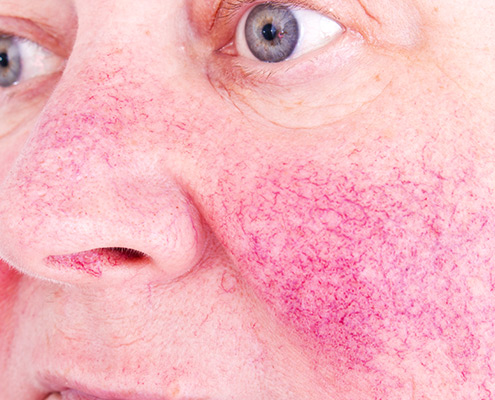
Rosacea Treatment
1. Avoidance of trigger factors
This will reduce the flushing episodes with rosacea and may slow down the progression of the condition.
2. Use of gentle products on the face
Skin cleansers, moisturisers and other products commonly can cause irritation in people with rosacea. A gentle product regime is essential to reduce the flaring and activity of rosacea.
3. Topical treatments
A number of topical treatments are available that provide good intermittent or long term management of rosacea. These can be prescribed by your dermatologist intermittently or on a long term basis, depending on the type of rosacea. Commonly prescribed products include Azelaic Acid, topical antibiotics and Soolantra. These all have anti-inflammatory effects and help reduce papules, pustules and redness. Topical treatments have also been developed for redness. These are effective for up to 12 hours after the product is applied. An example of this is Mirvaso.
4. Oral treatments
Oral treatments are indicated for more severe forms of rosacea. They are also useful to get initial control of flaring rosacea. These commonly include antibiotics. The most common antibiotic used is Doxycycline. For more severe forms of rosacea, retinoids are indicated.
5. Laser treatmeny
One of the more difficult components of rosacea is persistent redness. This can be treated with laser therapy, which would improve the appearance of the redness, but does not cure the underlying rosacea. Vascular lasers and IPLs are used.